

Rain collection is not illegal: a guide to all 50 states
 Collecting rainwater is legal in all 50 states. No state bans it, nobody is getting arrested over a barrel, and there’s no federal law against it. A few states limit how much you can store or what you can use it for, but regulated and illegal are very different words.
I get asked this constantly, at the market, in my DMs, in my Instagram comments, by neighbors who saw one scary headline a decade ago and never recovered. Anyone who visits my garden makes a comment on how I’m breaking the law. I get why there are misconceptions. I garden in Utah, one of the handful of states that actually does have rules. But they’re just rules, not a ban on collecting rainwater.
Where did the “rainwater is illegal” myth come from?
It’s a misremembered, over-generalized version of laws from a long time ago, and some states have current stricter laws than others. Decades ago, there were states where rainwater collection was illegal. Things have changed as climate change has progressed. Now, states are more interested in ever in making it easier for the average homeowner to make use of the rain that falls on their roof instead of letting it go to waste.
Out west, water runs on a system called prior appropriation, or “first in time, first in right.” Under it, the rain that would run off your roof and into a stream is treated as already belonging to whoever holds the senior water rights downstream. So historically, catching that runoff was a civil water-rights issue, not a crime. Then coverage of Colorado’s unusually strict rules got flattened into a national “you can’t catch rain” panic that is not actually true anywhere else. My Colorado friends get the worst of this, and even they are never going to jail over it.
Which states have real rules?
A handful of mostly Western states regulate rainwater harvesting. Here are the ones worth knowing, current to 2026. Rules change, so confirm yours before you build anything big.
Colorado is the strictest, and even Colorado allows it: up to two rain barrels, 110 gallons combined, for outdoor use on the property where you collect it. No drinking, no indoor plumbing, no permit.
Utah, where I am, lets you keep up to 200 gallons in two containers with no paperwork at all, or up to 2,500 gallons if you register online with the state for free.
Nevada legalized residential rooftop collection in 2017 for non-drinking use. Some sources have cited a storage cap, but the exact number is murky, so check the state if you’re going big.
Arkansas and Illinois allow it for non-drinking uses, but want the system built to code, by a licensed engineer in Arkansas and a licensed plumber in Illinois.
Oregon and Washington keep it refreshingly simple: collect off a rooftop, and you don’t need a water right at all.
Ohio is the plot twist nobody expects. It’s one of the most permissive states and even allows rainwater for drinking, with proper filtration, under state health rules. People have drunk from cisterns there for generations.
Which states will pay you to collect rainwater?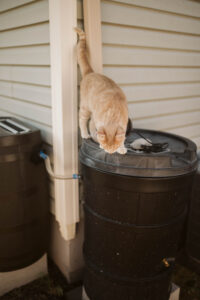
Several, and this is my favorite part because almost nobody mentions it.
Texas exempts rainwater equipment from state sales tax, won’t let HOAs ban systems, and several cities pile on rebates (Austin up to $5,000, San Antonio up to $2,000). Rhode Island gives a state income tax credit worth 10 percent of your cistern, up to $1,000. California keeps a rain system from raising your property taxes. Tucson, Arizona offers a residential rebate up to $2,000, and several Maryland counties run genuinely generous programs (Montgomery County and Prince George’s County are two).
One catch: Arizona’s old statewide residential tax credit expired at the start of 2026, so don’t count on that one. These programs come and go, so check what’s actually live in your state and city right now.
What about every other state?
Most of the country has no statewide restriction at all. Most states either stay silent (which means you’re free to collect) or actively cheer you on. The “restricted” list is short, almost entirely Western, and mostly about storage caps and drinking-water safety, not bans.
 How do I start collecting rainwater legally?
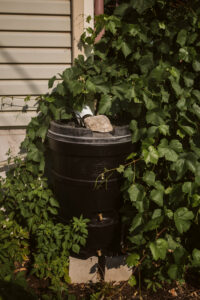
Start small and you almost certainly need nobody’s permission. Put a food-safe barrel under a downspout, screen the openings against mosquitoes and debris, and use the water on your landscape. Mine feed the vegetable and herb gardens. If you want a big system, or you want to drink it, that’s when you check your state and local rules, because that’s where the regulations actually live.
One inch of rain on a 1,000-square-foot roof sheds about 600 gallons. The high desert doesn’t hand me much rain, but when it does, I am not letting it just sit there in the ground far from where I’m planting.
Rainwater collection state-by-state
| State | Legal | Regulated | The rule, in brief | Official source |
|---|---|---|---|---|
| Alabama | Yes | No | No statewide restriction | NCSL map |
| Alaska | Yes | No | No statewide restriction | NCSL map |
| Arizona | Yes | No (incentives) | Encouraged; Tucson rebate up to $2,000. Statewide residential tax credit expired Jan 2026 | AZ Water |
| Arkansas | Yes | Yes | Non-potable; system must be engineer-designed, to plumbing code | EPA Arkansas |
| California | Yes | Yes | No water-right permit for rooftop capture; non-potable; property-tax exclusion (to 2029) | CA AB 1750 |
| Colorado | Yes | Yes | Strictest: 2 barrels, 110 gal total, outdoor use only, no permit | Colorado DWR |
| Connecticut | Yes | No | No statewide restriction; encouraged | NCSL map |
| Delaware | Yes | No | No statewide restriction; encouraged | NCSL map |
| Florida | Yes | Light | Non-potable guidance; encouraged | EPA Florida |
| Georgia | Yes | Yes | Outdoor, non-potable use | EPA Georgia |
| Hawaii | Yes | No | No statewide restriction; common practice, often encouraged | NCSL map |
| Idaho | Yes | No | No statewide restriction | NCSL map |
| Illinois | Yes | Yes | Non-potable; licensed-plumber install; IDPH standards | EPA Illinois |
| Indiana | Yes | No | No statewide restriction | NCSL map |
| Iowa | Yes | No | No statewide restriction | NCSL map |
| Kansas | Yes | Light | Permit may be required for non-domestic use | NCSL map |
| Kentucky | Yes | No | No statewide restriction | NCSL map |
| Louisiana | Yes | No | No statewide restriction | NCSL map |
| Maine | Yes | No | No statewide restriction | NCSL map |
| Maryland | Yes | No (incentives) | No statewide restriction; strong county tax-credit programs | NCSL map |
| Massachusetts | Yes | No | No statewide restriction | NCSL map |
| Michigan | Yes | No | No statewide restriction; encouraged | NCSL map |
| Minnesota | Yes | No | No statewide restriction; encouraged | NCSL map |
| Mississippi | Yes | No | No statewide restriction | NCSL map |
| Missouri | Yes | No | Right affirmed by statute (SB 782) | NCSL map |
| Montana | Yes | No | No statewide restriction | NCSL map |
| Nebraska | Yes | No | No statewide restriction | NCSL map |
| Nevada | Yes | Yes | Legalized 2017; single-family rooftop, non-potable (exact gallon cap disputed) | NV Water Resources |
| New Hampshire | Yes | No | No statewide restriction | NCSL map |
| New Jersey | Yes | No | No statewide restriction; state rain-barrel program | NCSL map |
| New Mexico | Yes | Light | Encouraged; some counties (Santa Fe) require harvesting on new builds | NCSL map |
| New York | Yes | No | No statewide restriction (treat if used for drinking) | NCSL map |
| North Carolina | Yes | Yes | Non-potable systems allowed; encouraged | NC DEQ |
| North Dakota | Yes | Light | Permit for irrigation over 5 acres or commercial use | NCSL map |
| Ohio | Yes | Yes | Permissive; allows potable use with treatment (Dept. of Health, OAC 3701-28) | EPA Ohio |
| Oklahoma | Yes | Light | Onsite non-potable framework; encouraged | EPA Oklahoma |
| Oregon | Yes | Yes | Rooftop collection only; potable needs licensed design pro | Oregon BCD |
| Pennsylvania | Yes | No | No statewide restriction; encouraged | NCSL map |
| Rhode Island | Yes | No (incentives) | No restriction; income tax credit 10% of cistern, up to $1,000 | NCSL map |
| South Carolina | Yes | No | No statewide restriction | NCSL map |
| South Dakota | Yes | Light | Permit required above 25,920 gallons/day | NCSL map |
| Tennessee | Yes | No | No statewide restriction | NCSL map |
| Texas | Yes | Light (incentives) | Legal and encouraged; notice to supplier; potable must be treated; sales-tax exemption | Texas Water Dev. Board |
| Utah | Yes | Yes | 200 gal without registration; up to 2,500 gal with free registration | Utah Water Rights |
| Vermont | Yes | Light | Non-potable outdoor use | NCSL map |
| Virginia | Yes | No (incentives) | No restriction; non-potable/outdoor; tax credit in statute (verify funding) | NCSL map |
| Washington | Yes | Yes | Rooftop collection needs no water right | WA Dept. of Ecology |
| West Virginia | Yes | Light | Non-potable use | NCSL map |
| Wisconsin | Yes | Light | Outdoor non-potable use | NCSL map |
| Wyoming | Yes | No | No statewide restriction | NCSL map |
An honest note: this is general information, not legal advice, and water law changes. Check your state water authority and your city before you build anything large or anything you plan to drink. Your local university extension office can point you to the current rule.
Want help putting it to work? Join Drought Club for free seasonal tips and a guide to using a lot less water.
Leave a Reply

I'm Carrie, a Master Gardener and Master Beekeeper in Utah. I grow more than water restrictions allow, and this is where I tell you how I do it.
Read more about me
I'm so glad you're here

© 2026 Drought Club. all rights reserved.
privacy policy