

How to cut your garden watering by up to 70%
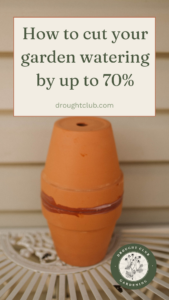 An olla (say it OY-yah) is an unglazed clay pot you bury in your garden bed and fill with water. The clay is porous and slowly sends moisture straight to the roots of your plants in the soil, which cuts watering up to 70 percent compared to watering the surface. I have an embarrassing amount buried in my vegetable beds and herb garden right now, and they’re a big part of why I still have a garden in a place that barely rains.
I grow on two acres of high desert in eastern Utah, where drought isn’t a bad season; it’s just the weather. Although I must admit that some years are much worse than others. Ollas are new to me this season in an effort to cut my water usage while we have strict water conservation efforts in place. When trying to figure out how to use less and still garden, I came across ollas, a concept thousands of years old, which has been used by indigenous populations across the globe for underground irrigation. I was skeptical at first. However, after having a huge success cutting back my water from 100-200 gallons per day in my veggie and herb beds to 100-150 gallons per week, I had to share.
What is an olla, exactly?
An olla is any unglazed clay vessel, buried up to its neck in soil, filled with water, and capped with a lid. Seems odd to seal up water inside a put and put it underground and hope for the best. The whole trick is in the word unglazed: the clay stays porous, so water moves through its walls into the soil instead of just sitting in the pot. Best part is that the water stays underground, eliminating evaporation. Some folks estimate that up to 50% of all outdoor watering is lost to evaporation, overwatering, and wind drift. 30% of that is evaporation in theory, possibly more.
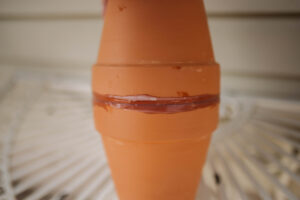
The word is Spanish for “pot.” You can buy beautiful pre-made ones, or do what I do and make them from two terracotta pots, a wine cork, and a little waterproof sealant, because I am cheap and it works. The store-bought ones are prettier. Mine cost about five to ten dollars. The plants cannot tell the difference and would not care if they could.
How do ollas actually save water?
Ollas work through soil moisture tension. When the soil around the pot dries out, it literally pulls water through the porous clay. When the soil’s already damp, the water stays put. The pot waters exactly as much as the soil asks for, and not a drop more. 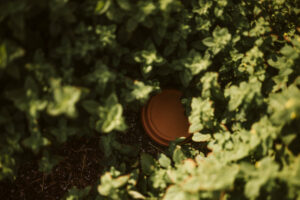
I became interested the hard way. I’ve been living on my property for 4 years now. In my first year, I hand-watered my entire vegetable garden. It wasn’t as big then, but it was still a lot of work, and I likely lost a lot of water to evaporation. In my second year, we set up lengthy drip line irrigation with all manner of emitters. The garden was bursting at the seams, but water wasn’t as scarce (it actually was – it just wasn’t as dire). These overwatered a lot, broke down often, and were a pain to store and put together. Plus, going in and out to turn them on to different parts of a large vegetable garden became a huge pain daily. In my third year, we used an Oto sprinkler, and even though it cut down on water by sending it to the exact area needed, it still had a lot of errors and missed spots in the beds, and overshot or under-delivered in many areas. In my fourth year, I went back to watering by hand. As an ADHD person, this did not go well. Watering was intermittent, and the plants didn’t do great. I’m now headed into my fifth year at this house, and I needed something that just worked. I needed something that I didn’t have to manage daily. I needed something that would also use less after one of the driest winters on record in Utah. A widely cited 2001 study by David Bainbridge put the savings at 50 to 70 percent with an olla versus conventional watering methods, and after the last few years, I didn’t need convincing.
Where did ollas come from?
Ollas are at least 4,000 years old. The earliest written descriptions come from ancient China. However, the method was also seen through North Africa and the Middle East along trade routes, and it turned up in the pre-Columbian Americas. Basically, every dry-land culture on earth figured out the same clever thing: bury a clay pot, lose less water.
So if it feels low-tech, good. It has outlasted every empire that ever used it, which is more than I can say for my last watering method.
 How do you use an olla?
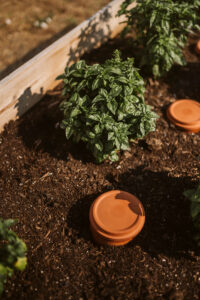
- Dig a hole in the middle of your bed, deep enough that only the neck sits above the soil, about one to two inches.
- Set the olla in and pack soil firmly around it. Air gaps slow the seep.
- Fill it and cap it with the lid or a flat stone. The lid keeps out dirt and mosquitoes, and prevents the water inside from evaporating.
- Plant within about a foot of the olla. The damp zone reaches out roughly as wide as the pot is round. Although this can vary depending on the type of olla you use, your soil, and how much water a plant likes.
How often do you refill an olla?
Every three to four days, depending on heat, soil, and what you’ve planted. In May and early June, I only filled them once a week. Heading into July and the heat of summer, I’m at the every three days mark. I expect it’ll go down at the beginning of September to once per week, and in October, as things finish up, probably once every two weeks. Checking is the easiest job in the garden: lift the lid and look. Empty means the soil drank it, which means it’s working. While filling them up can take some time, it also ensures you get out into your garden and weed and check the health of your plants regularly. When you have an automated system, it can be easy to forget to go out and manage it.
What grows best with an olla?
Plants with fibrous, spreading roots: tomatoes, squash, melons, peppers, most annual vegetables. Their roots find the damp ring around the clay and move in.
I put ollas where the thirsty annuals live and let the natives fend for themselves. And one warning I plan on listening to from others, pull them out of the ground before the first big freeze. Saturated clay plus a deep winter equals a broken pot. Empty them, bring them in, and they’ll last for years. I’m planning on storing mine in the garage, keeping the tops covered so I don’t find any surprise spider friends in the spring when I take them out to use again.
Ollas are budget-friendly and use some of your time every few of days. The best part is just how much they’ll cut back your water use. And with the climate not changing back to where it should be anytime soon these little waterers can help us all do more with less.
Want more like this? Join Drought Club, and I’ll send seasonal tips, the free olla class, and first dibs on everything the garden makes.
Leave a Reply

I'm Carrie, a Master Gardener and Master Beekeeper in Utah. I grow more than water restrictions allow, and this is where I tell you how I do it.
Read more about me
I'm so glad you're here

© 2026 Drought Club. all rights reserved.
privacy policy